Orders received by 10:30 AM are shipped the same business day.
Free shipping on orders over €40
Payment on delivery, by card, or bank transfer
On working days: 9–21 AM/PM Subject: 10 AM - 3 PM | Sundays & holidays: closed

 EN
EN
EN
EN
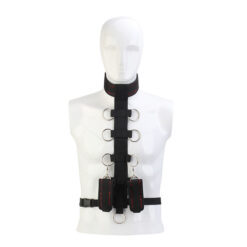
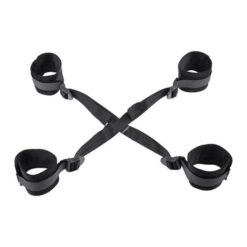
Binding equipment allows for the exploration of movement restriction, relinquishing of control, and various body positions during consensual BDSM play. From soft cuffs and simple ties for beginners to metal cuffs, ropes, spreader bars, and more complex bed systems, each product offers a different level of restraint and requires appropriate preparation.
In this category, you will find handcuffs and leg cuffs, cotton ropes, bondage straps, adjustable belts, accessories for connecting multiple restraints, under-mattress systems, and products for holding hands and feet in a predetermined position. When choosing, pay attention to the material, dimensions, adjustment method, and quick-release capability.
Restricting movement changes how a person experiences touch and anticipation. When they can't freely move their hands or legs, they pay more attention to their partner's touches, sounds, and what might come next. The feeling of relinquishing control can be as important as the physical binding itself.
Bondage doesn't have to be tight or complicated. For some couples, soft wrist restraints or a single strap restricting hand position are enough. Others may wish to tie multiple pieces of equipment together or use a bed system. Intensity should always match the experience, mobility, and limits of the person being restrained.
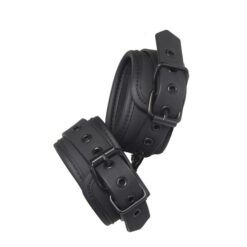
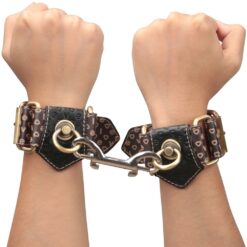
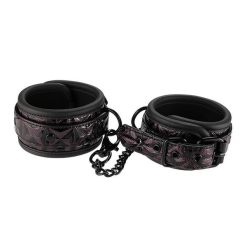
Handcuffs They are one of the simplest ways to introduce bondage into intimate play. They can be made of metal, faux leather, textiles, or other materials, and some models have soft padding to reduce pressure on the wrists.
Cuffs should remain in place but must not press on nerves or impede circulation. After application, there should be enough space between the cuff and the skin so that the strap does not dig into the wrist. The key or quick-release mechanism must be accessible at all times.
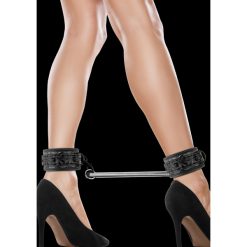
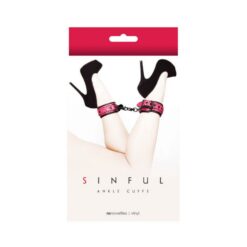
Leg cuffs They are most often placed around the ankles and connected by a shorter chain, strap, or buckle. They limit stride length or hold the legs in a certain position, depending on the product's design.
Some sets connect the wrists to the thighs or ankles, creating a more pronounced restriction of movement. Before tightening, check if the person can hold the position without pain in their shoulders, hips, knees, or lower back.
Handcuffs and restraints must not be applied to the wrists in a way that forces them into an unnatural position. A position that is initially comfortable can become strenuous after a few minutes, so regularly check if the person is experiencing pain, tingling, cramping, or numbness.
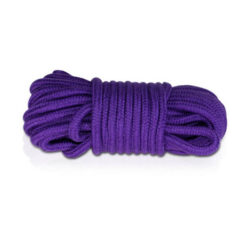
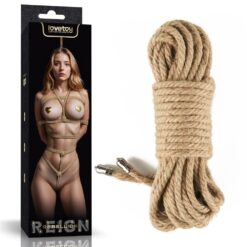
Tie-down strap offers more possibilities than classic handcuffs as it can be adapted to different body parts and positions. Cotton rope is usually softer on the skin and more suitable for simpler ties, while rougher or thinner materials can create more pressure.
Beginners should start with simple wrist or ankle ties that can be quickly released. Complex knots, torso bondage, and positions that strain the joints require more knowledge and experience.
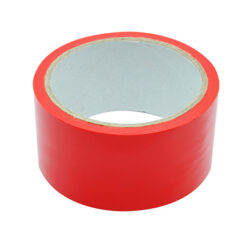
Bondage tape They are a practical alternative to rope. Some models adhere to themselves, not to skin and hair, which is why they can be easily wrapped around wrists, ankles, or other body parts.
The tape must not be wrapped so tightly that it cuts into the skin or impedes circulation. Multiple layers can create considerably more pressure than initially appears, so the binding should be checked regularly.
Never place the mask over your mouth, nose, or neck. After use, remove it slowly, without any sudden pulling that could irritate the skin.
Spreader bar It is a rigid bar with handcuffs or attachment points at its ends. It most commonly serves to keep the legs or arms at a certain distance, thereby reducing the possibility of the limbs coming closer together.
The length of the bar directly affects body positioning. Before use, check if the person can comfortably maintain the selected distance without overstretching muscles, hips, or shoulders. The solid parts of the product must not hit the face, spine, or other sensitive body parts.
A spreader bar is not intended for supporting full body weight or for suspension, unless the manufacturer explicitly states the appropriate load capacity and intended use of the product.
Bed restraint systems They most often consist of long adjustable straps that are placed under the mattress and connect to wrist and ankle cuffs. They allow for restraint to the bed without permanently mounting equipment to the frame or wall.
Before use, check that the straps are evenly positioned and that each cuff can be released individually. Do not extend the arms and legs to the extreme range of motion. A small range of motion is usually more comfortable and reduces stress on the joints.
The bed system can be combined with blindfold, perches, or other sensory stimulation products. When a person is tied in multiple places, the partner in charge of the game must have easy access to all buckles and the ability to quickly release them.
Hogtie attachment The handcuffs connect the wrists and ankles behind the body. This position significantly restricts movement and can put a lot of strain on the shoulders, back, hips, and knees, making it unsuitable for everyone.
To begin, the arms and legs should not be held close together. A longer tether allows for a gentler position and easier monitoring of the body's reaction. Hogtie restraints should be brief, with frequent checks for comfort, circulation, and breathing.
People with joint problems, spine issues, mobility difficulties, or breathing problems should avoid positions that further strain them.
Before starting, discuss which body parts are okay to tie, positions you want to try, and how long a person can be in a certain position. Consent to tie wrists does not automatically mean consent to tie legs, blindfold, or use other BDSM props.
Agree on a safe word or a system like "green, yellow, red." Green means everything is okay, yellow means the restraint needs to be loosened or repositioned, and red means the person must be freed immediately.
If binding is combined with a gag that makes it difficult to speak, a clear non-verbal signal needs to be agreed upon in advance, for example, dropping an object that the person is holding.
Bondage equipment can be combined with masks, gags, paddles, collars, and other props. However, each additional element increases the intensity of the play and can make communication or quick release more difficult.
To start, use only one or two products. For example, soft handcuffs can be combined with a blindfold, while more complex positions and multiple tie-down points can be saved for when both partners have gained more experience.
For pre-made combinations with multiple add-ons, you can also browse and S&M; sets, However, before use, each part of the kit should be inspected and tested separately.
Wipe the faux leather cuffs and straps with a soft, slightly damp cloth, then dry them completely. Do not soak them or clean them with harsh agents that could damage the surface or metal connectors.
Textile leashes, harnesses, and ropes should be maintained according to the manufacturer's instructions. If they are washable, they must be completely dry before storage. Damp ropes or textiles can develop an unpleasant odor, mold, and damage to the fibers.
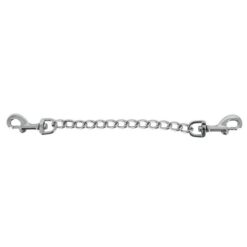
After cleaning, thoroughly dry metal handcuffs, buckles, chains, and carabiners. Before each use, check that the locks and release mechanisms are working and inspect for any sharp edges, cracks, loose connections, or signs of rust.
Keep bondage tapes clean and protected from dust. Do not reuse the product if it is stretched, damaged, or no longer maintains the shape and firmness required for its intended use.
Binding equipment can introduce a sense of surrender, anticipation, and heightened connection into intimate play. Choose a product that suits the experience and mobility of both partners, learn how to release it before use, and throughout the entire play, regularly check for comfort, circulation, and the ability to communicate.
The products are intended for adults. Use them exclusively with mutual consent and in accordance with the manufacturer's instructions.